
Find the right GPU capacity before the market does.
Omega Gradient helps AI teams secure high-performance GPU capacity across bare metal, private cloud, colocation, and on-demand providers — translating technical requirements into credible options with the right economics, geography, and power.
Global AI infrastructure access without the vendor maze.
Reserved cluster sourcing
Turn workload, topology, region, start date, and term into a decision-ready shortlist with normalized quotes and delivery evidence.
Explore reserved clustersOn-demand GPU access
Source short-term or flexible GPU capacity through bare-metal servers, virtual machines, and provider networks built for AI workloads.
Browse on-demandMarket pricing analysis
Benchmark global GPU pricing, availability, term structures, provider risk, and deployment tradeoffs before you commit capital.
Open the price indexLive public market GPU pricing tracker.
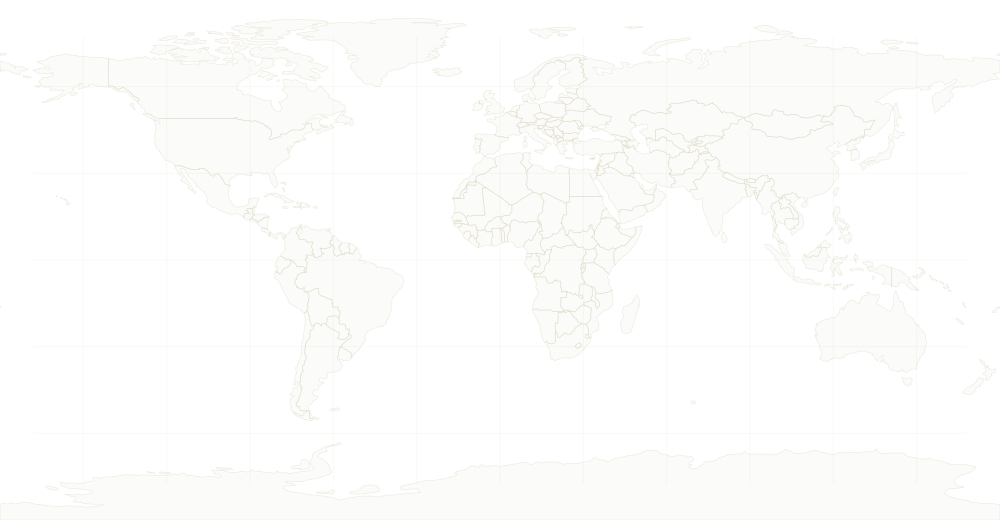
Explore regional market observations.
Public records grouped by explicit region. Coverage shows research observations, not a confirmed allocation. Broad regional records are not assigned to individual countries. HoverTap any node to review the coverage.
Move from a GPU name to a procurement decision.
Reserved vs. on-demand
Choose continuity, flexibility, or a base-plus-burst mix.
Compare the models ↗ 02 / HOPPERH100 & H200
Evaluate topology, fabric, storage, and delivery evidence.
Read the guide ↗ 03 / BLACKWELLB200, B300 & GB300
Normalize rack-scale architecture and commercial commitments.
Read the guide ↗ 04 / NEXT PLATFORMVera Rubin
Understand what is known, preliminary, and not yet contract-ready.
Read the guide ↗GPU sourcing, answered.
Q.01
What is Omega Gradient?
Omega Gradient is a GPU supply sourcing and intelligence desk for reserved clusters and on-demand compute. We shape the requirement, scan provider options, normalize technical and commercial terms, and qualify the path to delivery. Public pricing data supports the comparison; private supply and buyer diligence remain confidential.
Q.02
How fast can I get GPUs?
For reserved blocks and larger clusters, timing depends on whether capacity is live, allocated, being installed, or under development. Omega Gradient makes that evidence status explicit. For flexible needs, on-demand instances can deploy from the live marketplace when inventory is available.
Q.03
How does Omega Gradient pricing work?
We source capacity through operators and infrastructure partners. The contracting, billing and support structure depends on the provider and deployment and is set out in the proposal. Marketplace listings show hourly pricing and use prepaid credits. Our dated price index provides public-rate context; reserved quotes depend on the system, term and delivery conditions.
Q.04
Which GPUs can Omega Gradient source?
We help source Hopper and Blackwell capacity, including H100, H200, B200, B300, GB200 and GB300 systems. The right option depends on your region, start date, term and workload. The supplier pricing report shows dated public rates; the marketplace shows its current catalog.
Q.05
What do H100, H200 and B200 GPUs cost per hour?
In the public price snapshot assembled 2026-11-07 (source observations 2026-11-02 – 2026-11-07), median provider-average rates were H100 $2.85, H200 $4.31, B300 $9.50, GB300 $15.72, A100 $2.18 and L40S $1.73 per GPU-hour; B200 had no included public rate. These are dated public list-price observations across the monitored registry, not quotes or allocations. Min, median and max by GPU family, with source observation dates, are on the dated price index; reserved cluster pricing is quoted per system, term and delivery condition.